Hedge

The platform

The operational record is the accounting record.

A bag of feed leaving the store is a stock movement and a journal entry, posted once. That single decision is why a cost per kilo of gain, a cost per egg and a set of statements a bank will accept all come out of the same system — instead of out of a spreadsheet somebody rebuilds every quarter.

Shape of the system In production

Component

Today

Operational modules 6
Sites consolidated into one ledger 2 With an inter-farm account between them, so transfers do not vanish on the way
Accounting basis IFRS-aligned
Runs offline, installs on a phone Yes
Row-level isolation between companies Enforced in the database Not in the application layer, where a missing filter is a data leak rather than a bug

The data path


Five steps, and they only work in this order.

Farm data does not arrive clean. It arrives as a photographed notebook page at six in the evening, from someone with no laptop and one bar of signal. These steps are numbered because the sequence matters — post before you read and the ledger is wrong, report before you post and the report is fiction.

1

It is written on paper

A tally sheet at the shed door. This is where almost every farm record in the region actually begins, and a system that pretends otherwise is a system nobody fills in.

2

It is captured as it is

Excel, PDF, or a photograph of handwriting. Hedge reads the document, maps the columns and proposes the records — it does not ask the shed to retype anything.

3

It is checked before it lands

Guards live in the database, not just the form: head counts that cannot go negative, a cumulative total that cannot be logged as a day's figure, an edit that has to leave a reason.

4

It posts once, to both sides

The operational record and the journal entry are the same event. There is no nightly sync to go wrong, because there is nothing to sync.

5

It comes back out as a document

A statement pack, a management report, an export under your own letterhead — and every figure on it drills back to the rows that made it.

Schematic

One record, one posting, two readers

Paper tally photographed Spreadsheet any column order PDF / invoice supplier documents Capture and validation columns mapped · guards enforced in the database The operational record = the accounting record one event, one posting — nothing to reconcile between two systems Operational reports lay rate · FCR · mortality Statement pack IFRS-aligned · your letterhead

Modules


Six systems that behave like one.

Each one is useful alone. The reason they are worth having together is that a figure from any of them can be traced to a figure in any other without a person in the middle re-keying it.

01

Livestock

Animals, individually

Parentage, weight log, average daily gain and feed conversion for every animal. Breeding calendar and farrowings, automatic stage transitions as animals age, and mortality that reconciles against head count instead of drifting from it.

  • Batches and individuals in the same herd
  • Weights and ADG against the breed curve
  • Vaccination and treatment history per animal
02

Land

Crops and plantation

Blocks and plots, planting through harvest, input applications that draw stock down as they are recorded, and yield booked against the land that produced it.

  • Cost per block, not cost per farm
  • Applications post to inventory automatically
  • Harvest recorded against the plot it came off
03

Inputs

Feed and inventory

Ration formulas over an ingredient library, procurement and deliveries, and issues to a named house or pen — so feed consumed can be set against the weight it bought.

  • Rations costed from the ingredients actually bought
  • Issues attach to a house, a pen or a batch
  • Stock on hand is a live figure, not a stocktake
04

Finance

A real ledger underneath

A proper chart of accounts and double-entry journal behind every record, with an IFRS-aligned statement pack, budget versus actual, AR and AP aging, bank and capital reconciliation, and an inter-farm account between sites.

  • Every operational event has a journal behind it
  • Multi-site consolidation with an inter-farm account
  • Budget versus actual by enterprise, not just by company
05

People

Payroll that posts

Payroll runs that write to the ledger on approval, so labour lands in the cost of the batch that used it rather than in a lump at month end.

  • Approval before anything touches the ledger
  • Labour allocated to the enterprise that consumed it
  • Payslips out of the same record as the posting
06

Reporting

Documents a bank accepts

Management reports and a full statement pack, exported to PDF, Excel or CSV under your own letterhead — with every figure drilling through to the records behind it.

  • Drill-through from any total to its rows
  • PDF, Excel and CSV out of the same figures
  • Your letterhead, not ours

Automation


The system reads, writes and warns.

Where the machine helps is at the edges of the record — getting it in, getting it out, and refusing an entry that cannot be true. Not in deciding what the farm should do.

Ask

A number, in plain language

The assistant finds the figure, opens the screen it came from and shows the rows behind it — so an answer can always be checked, never just trusted.

Read

Paperwork as it is

Daily sheets arrive as Excel, as PDF, as a photograph of handwritten paper. Hedge reads them, maps the columns and files the records.

Reach

People who are not at a desk

Task digests by email, and alerts by SMS and WhatsApp, so a vaccination due or a mortality spike reaches the person who can act on it.

Refuse

The impossible entry

Guards in the database, not just the form: head counts that cannot go negative, cumulative totals that cannot be logged as a day's figure, edits that leave a reason and an audit trail.

Where the AI sits

It never invents a figure

Reading a photographed tally sheet, mapping an unfamiliar spreadsheet column, and answering a question in plain language — that is the whole remit. Every answer opens the screen and the rows it came from. We publish no claim that AI raises output, because we went looking for the evidence and did not find it; what we found instead is on the evidence page.

Control and audit


A ledger a third party can rely on.

A record only has value to a bank, an auditor or a buyer if it cannot be quietly rewritten. These are the controls that make the difference between a database and a book of account.

Access

Roles that actually restrict

Permissions are enforced row by row in the database, so a role that should not see payroll cannot reach it by any route — not through a report, not through an export, not through a URL somebody was sent.

Approval

A queue for anything that touches money

Payroll runs, journals and adjustments wait for approval before they post. The person who raises an entry and the person who approves it are recorded separately.

Audit

Every edit leaves a reason

Changes to a posted record are not silent. The system asks why, keeps the before and the after, and stamps who and when — which is what makes the trail worth reading a year later.

Integrity

Guards below the form

Constraints live in the database. A head count cannot go negative, a cumulative total cannot be filed as a daily figure, and a duplicate day cannot be inserted — regardless of which screen, import or script is trying.

Isolation

One company cannot see another

Tenant isolation is enforced at the row level in the database rather than by a filter in application code, because a filter somebody forgets to write is a data leak, not a bug.

Sessions

Locked out, and logged out

Repeated failed sign-ins lock the account, and an idle session ends itself — because a shed office computer is not a private desk.

Built for the field


Written where the signal drops.

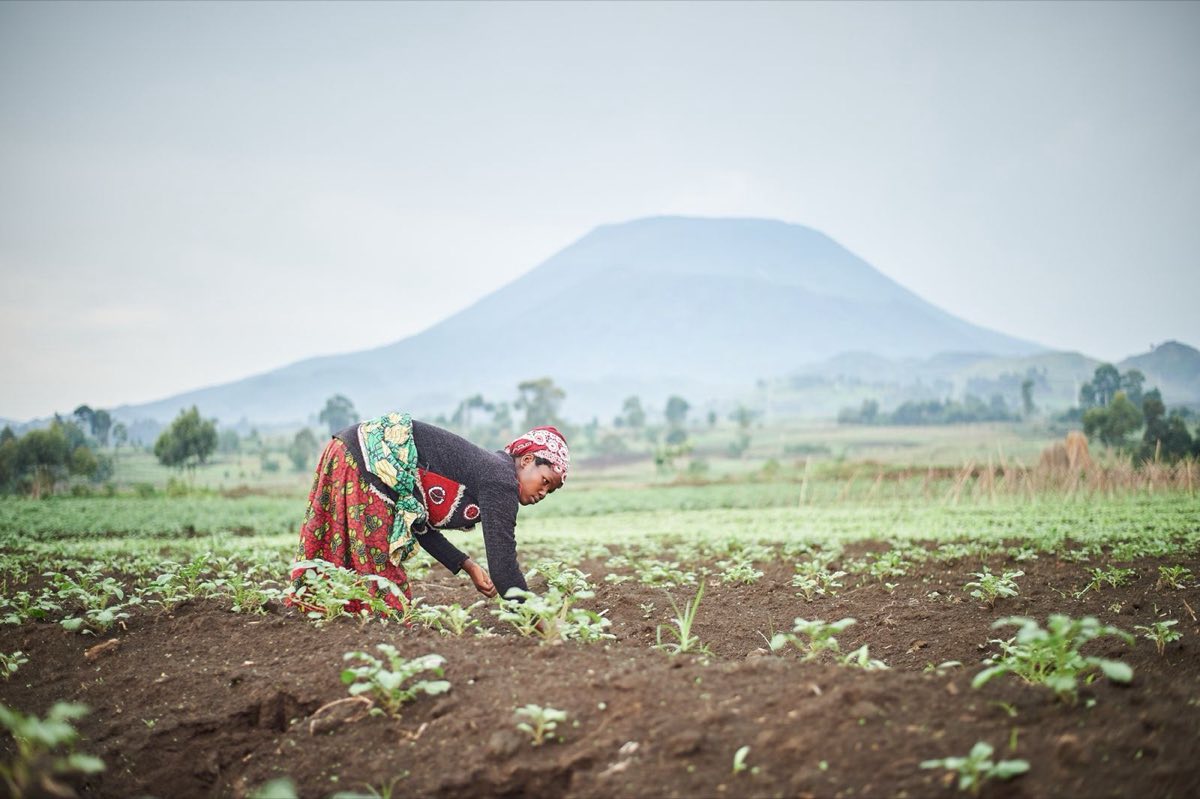
A farmer working a field by hand, a volcano of the Virunga range standing in the haze behind. Field conditions
Rural Rwanda online 19% against 57% urban
This is where the sheet gets written. An entry that needs a connection to exist is an entry that does not get made — so capture holds on the phone and reconciles when the signal comes back. ITU, 2025 · 38% national, 57% urban, 19% rural
Design constraint Software written for a farm in Iowa assumes the connectivity, the currency and the paperwork of a farm in Iowa. Hedge was written on a farm in Rwanda, against the problems that farm actually has. Hedge · Kigali, Rwanda
  • Installs on a phone. It is a progressive web app — added to the home screen, opened like anything else, no store account needed.
  • Survives a dropped connection. The interface keeps working on one bar and reconciles when the signal comes back.
  • Reports in your currency. RWF today, with the ledger built to carry others rather than assuming dollars.
  • Assumes paper first. Capture is built around a photograph of a written sheet, because that is what the shed produces.
  • Reaches people off the system. SMS and WhatsApp alerts, so acting on a mortality spike does not require being logged in.

See it on the live farm