
Systems for agribusiness

Every hectare, every animal, every franc — one ledger.

Hedge is the operations and accounting system for African agribusiness. The herd, the flock, the crop, the feed store, the payroll and the books are one record — so the cost of a batch is a number the system already knows, not a weekend in a spreadsheet.

Running live


Hedge already runs a farm. Not a pilot — the books.

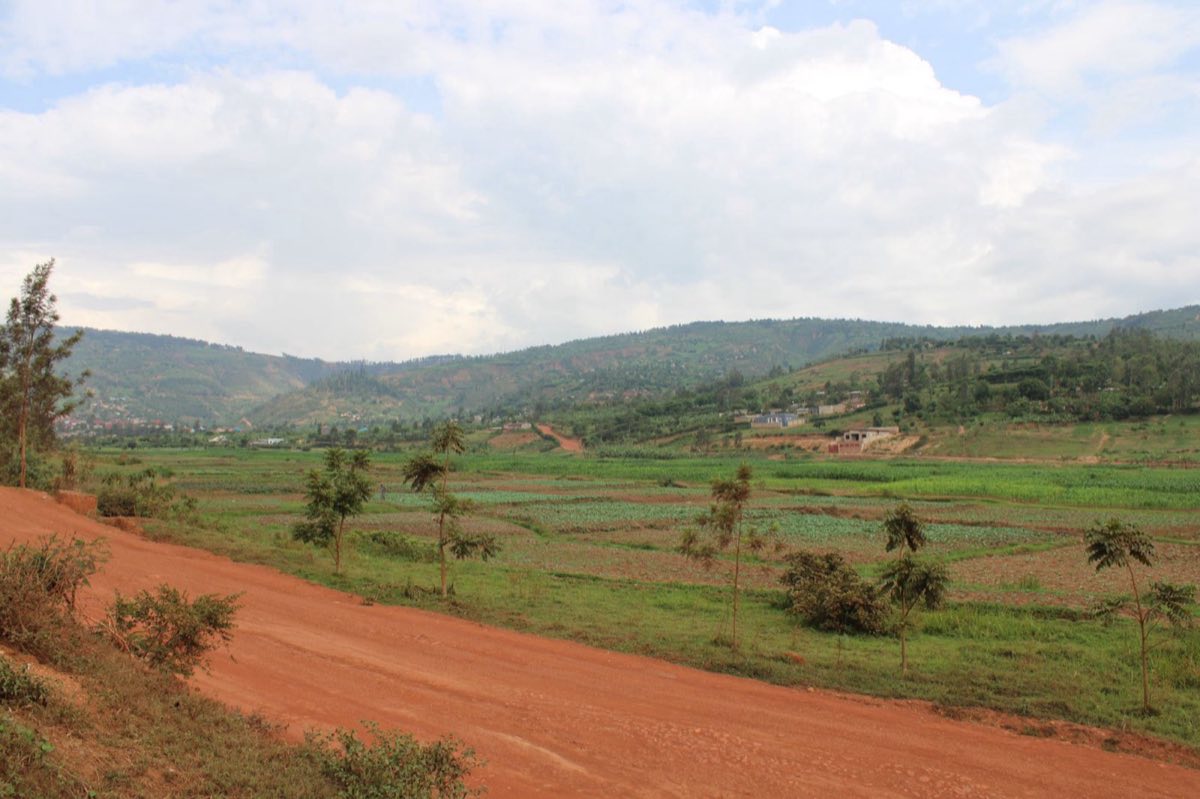
Farm Creek Ltd raises pigs and poultry and grows banana across two sites in Rwanda's Eastern Province, and runs its daily operations and its statutory accounts on Hedge. Every capability on this page is in use, in the field, today.

  • 2Sites, one consolidated ledger
  • 3Enterprises — pigs, poultry, banana
  • RWFReported in local currency
  • IFRSAligned management accounts

The ground you farm


Three enterprises, and what the national record says about each.

We went and read the surveys, the strategies and the breed manuals before writing a word of this page. Some of what we found is uncomfortable — Rwanda's poultry statistics disagree with each other by a factor of six, and the 2026 press figures for egg output turn out to be the government's own planning targets reported as achievements. So every number below is attributed. Where the sources conflict, we say which one we chose.

Pigs

1,006,890 head NISR, Agricultural Household Survey 2024

Farms that keep any record at all
38%
Mbuza et al., Int. J. Livestock Production, 2016
Records kept at slaughter slabs
None
Frontiers in Vet. Sci., pig value-chain mapping
Farms that are smallholdings of one or two sows
90–95%
Frontiers in Vet. Sci. — fewer than 100 commercial farms nationally
Deducted for a single cysticercosis cyst
RWF 5,000
Frontiers in Vet. Sci. — 20–40% of a medium pig's value

Farmers rank their own constraints as feed (66.8%), breeding stock (43.5%), disease (38.2%), marketing (37.4%) and credit (26.9%). African swine fever has been notified to WOAH 381 times, with 7,463 deaths recorded between 2005 and 2019. And the record itself is about to stop being optional: PSTA 5 raises compulsory pig registration from 50% in 2024/25 to 90% by 2028/29.

Layers

1,272,783 birds — 33% of a 3.86m national flock NISR, AHS 2024, Table 45

Eggs a Rwandan ISA Brown lays to 90 weeks
360
Netherlands, Poultry Sector Analysis Rwanda 2019
Eggs the same genetics are rated for
476
Hendrix Genetics / ISA, breed objective to 100 weeks
Flock mortality MINAGRI works from
20%
MINAGRI, Livestock Development Strategy 2024–2029
Mortality the breed manual calls normal
5–7%
Lohmann Brown-Classic, liveability in lay 93–95%

Rwanda produced 112,856,811 eggs last survey year and sold 68% of them, so the market is not the problem either. Purchased birds outnumber home-hatched ones eight to one, which means almost every layer on a Rwandan farm arrived with a performance specification attached. The genetics are not the constraint. The management data is.

Broilers

240,711 birds — 6.2% of the flock NISR, AHS 2024, Table 45

Cobb 500 weight on day 35
2,521 g
Cobb-Vantress performance supplement 2022, cumulative FCR 1.441
Rwandan slaughter age and weight
42–45 d
Netherlands 2019 — 2.4–2.5 kg at 45 days at a commercial integrator
Stocking in Rwandan houses
5–10/m²
Netherlands 2019, against CASA's own 4–5/m² recommendation
Domestic chicken meat market
RWF 153 bn
CASA, 2020 — thirteen times the egg market

A bird that takes forty-five days to reach a weight its breed sheet reaches on day thirty-five has eaten ten extra days of feed to get somewhere it was already going. That is the most expensive week in Rwandan poultry, and almost nobody measures it — because measuring it needs daily weights and daily feed issues against the same house.

The same primitives, other species

  • Pigslive
  • Layerslive
  • Broilerslive
  • Cattlenot yet
  • Fishnot yet
  • Rabbitnot yet
  • Beesnot yet

A herd, a batch, a feed issue and a mortality event are the same four records whatever is eating the feed, and Hedge is built on those primitives rather than on pigs and chickens specifically. But no Hedge customer runs cattle, fish, rabbit or bees today, and we have no Rwandan benchmark data for them worth publishing. If you run one of those, come and talk to us about being the first — and expect us to say so plainly rather than show you a screen that does not exist.

What the gap is worth


Put your own flock in, and read the arithmetic.

This is not a savings estimate and Hedge is not in it. It is the published Rwandan figure set against the published breed figure, multiplied by your flock — the size of the prize, before anyone sells you anything. Every input names its source, and the two inputs that are assumptions rather than citations are marked as such and left for you to change.

The gap, on your flock, for one cycle

Per laying cycle, roughly ninety weeks.
What is measuredRwanda todayThe standardGapOn your flock
Birds lost over the cycle MINAGRI works from a 20% national baseline. The breed manual calls 5–7% normal, so we use the kinder 7%. 20%MINAGRI 2024–29 7%Lohmann Brown-Classic 13 points
Eggs never laid Rwandan field yield is measured to 90 weeks and the breed objective to 100, so this understates nothing — those ten weeks cost feed too. 360 eggsISA Brown in Rwanda, 2019 476 eggsISA Brown objective 116 per hen
The gap, on your flock, for one cycle

For scale: at the breed's own 112 g a day, your flock eats of feed every day, or a week. Feed is about 70% of the cost of keeping poultry in Rwanda, so a week of wastage nobody noticed is the whole margin.

Marked inputs are assumptions, not citations. Feed at RWF 700/kg comes from Rwandan trade press in early 2026 and is the softest number on this page — put your last invoice in instead. Everything unmarked is traceable to a named survey, strategy document or breed manual; the full list, including the figures we found and deliberately refused to publish, is kept alongside this site.

What it runs


Six systems that behave like one.

Most farms run production in a notebook and finance in a spreadsheet, and the two never meet. In Hedge the operational record is the accounting record — a bag of feed leaving the store is both a stock movement and a journal entry, posted once.

Livestock

Animals, individually

Every animal with its parentage, weight log, average daily gain and feed conversion. Breeding calendar, farrowings, automatic stage transitions, and mortality that reconciles against head count instead of drifting from it.

Land

Crops and plantation

Blocks and plots, planting through harvest, input applications that draw stock down as they are recorded, and yield booked against the land that produced it.

Inputs

Feed and inventory

Ration formulas over an ingredient library, procurement and deliveries, issues to a named house or pen — so feed consumed can be set against the weight it bought.

Finance

A real ledger underneath

A proper chart of accounts and double-entry journal behind every record, with an IFRS-aligned statement pack, budget versus actual, AR and AP aging, bank and capital reconciliation, and an inter-farm account between sites.

People

Payroll that posts

Payroll runs that write to the ledger on approval, so labour lands in the cost of the batch that used it rather than in a lump at month end.

Reporting

Documents a bank accepts

Management reports and a full statement pack, exported to PDF, Excel or CSV under your own letterhead — with every figure drilling through to the records behind it.

Automation


The system reads, writes and warns.

Farm data does not arrive clean. It arrives as a photographed notebook page at 6pm, from someone with no laptop and one bar of signal. Hedge is built for how the record actually reaches you.

  • Ask for a number in plain language

    The assistant finds the figure, opens the screen it came from and shows the rows behind it — so an answer can always be checked, never just trusted.

  • Bring the paperwork as it is

    Daily sheets arrive as Excel, as PDF, as a photograph of handwritten paper. Hedge reads them, maps the columns and files the records.

  • Reach people who are not at a desk

    Task digests by email, and alerts by SMS and WhatsApp, so a vaccination due or a mortality spike reaches the person who can act on it.

  • Refuse the impossible entry

    Guards in the database, not just the form: head counts that cannot go negative, cumulative totals that cannot be logged as a day's figure, edits that leave a reason and an audit trail.

What record-keeping is actually proven to do

The best-controlled study we could find — 912 dairy herds, software users against non-users — found first calving two and a half months earlier and a 163% modelled marginal return on the software. It found no significant difference in yield. Journal of Dairy Science, Costa Rica

So we argue the other side of it

Records do not make an animal produce more. They make the losses visible — and in African smallholder poultry those run to half the flock, with three-quarters of brooding chicks lost. A Kenyan study of 1,908 households found 70% of all off-take was involuntary loss, and 12% had reached a vet. FAO; Kenya household survey

Where the AI sits

Reading a photographed tally sheet, mapping an unfamiliar spreadsheet column, and answering a question in plain language. It never invents a figure: every answer opens the screen and the rows it came from. We publish no claim that AI raises output, because we found no evidence for one.

And what sustainability means here

A bird that dies has eaten its feed and produced nothing — the emissions of the whole flock, divided across fewer eggs. Commercial layers convert 2.3 kg of dry matter per kg of egg; backyard flocks need 9.2. Cutting loss is the cheapest decarbonisation a farm has, and it happens to be the same work as cutting cost. FAO GLEAM; Poore & Nemecek 2018

The market you sell into


Costs are moving faster than prices — and faster than most farm records.

Rwandan food inflation is the mildest major component in the basket. Everything a farm buys is not. That is the squeeze, in one line: you are absorbing energy and transport at four and six times the rate you can pass on at the farm gate.

  • 13.6%Headline inflation, year on year
  • 7.5%Food and non-alcoholic beverages — the mildest major component
  • 44.8%Energy — the fastest
  • 34.0%Of its dollar value the franc gave up between 2020 and 2025

NISR consumer price index, June 2026 · exchange rate from a daily public feed · curated 1 August 2026

What the inputs are doing
SignalLatestChangeSource
Maize, national average across 26 markets The single biggest line in a poultry ration, and the one that sets your feed invoice. RWF 560/kg ▲ 14.5% y/y FEWS NET / e-Soko, May 2026
Maize, five-year move ▲ 139% FEWS NET / e-Soko
Maize, world price Falling, while Rwanda's rises. The local feed market is not tracking the global one, so watching Chicago will not tell you what next month's ration costs. USD 197.1/mt ▼ 8.8% m/m World Bank Pink Sheet
Soybean meal, world price The protein side of the ration, and it is still climbing while maize falls. USD 425/mt ▲ rising World Bank Pink Sheet
Rwandan franc against the dollar Premix, vaccines, day-old parent stock and equipment are all imported and priced in dollars. 1,472.39 ▲ 51.4% since 2020 Daily public exchange feed
Agriculture's share of all bank lending Nineteen per cent of GDP, financed by under three per cent of the credit. A lender who cannot read your record cannot price your risk. 2.7% — of the loan book NISR / BNR

One number is missing here on purpose. There is no current published Rwandan egg price. The WFP series ends in 2015 and FEWS NET carries no eggs at all — so the thing a layer farm actually sells is, nationally, unmeasured. Every farm we have worked with knows its own gate price to the franc and can produce it in seconds; the country cannot. That asymmetry is the whole argument for keeping the record, and it is why we would rather show you an absence than an invented figure.

Who it is for


Built where the constraints are real.

Software written for a farm in Iowa assumes the connectivity, the currency and the paperwork of a farm in Iowa. Hedge was written on a farm in Rwanda, against the problems that farm actually has. Hedge · Kigali, Rwanda
  • Commercial farms with real books. If your accountant needs statements a bank or the revenue authority will accept, that is the case Hedge is built for.
  • Mixed enterprises. Livestock and crops under one company, costed separately but consolidated into one set of accounts.
  • More than one site. Per-site operations with an inter-farm account, so transfers between them do not vanish.
  • Teams, not just owners. Role-based access across modules, an approval queue for anything that touches money, and a full audit log.
  • Local reality. Reported in your currency, installable on a phone, and designed for records that begin on paper.

Access


See it running on a real farm.

Hedge is onboarding its next operations deliberately, one at a time. Tell us what you run and we will walk you through the live system — the actual herd, the actual ledger — and then talk about yours.

We use what you send only to reply to you. See the privacy notice.