Hedge

Company

We did not build this for a farm. We built it on one.

Hedge started as the system Farm Creek Ltd needed and could not buy. Everything on this site exists because a pig died, a feed bag went unrecorded, or a month's books took a weekend to close — and then somebody wrote the screen that stopped it happening again.

One operation live Kigali, Rwanda Onboarding one at a time
The company, exactly No round numbers

Hedge · as it actually stands

August 2026

Operations running their real books on Hedge 1 Farm Creek Ltd · not a pilot and not a sandbox — the statutory accounts
Sites under that one consolidated ledger 2 Karaba and Kayonza, Eastern Province, with an inter-farm account between them
Enterprises costed separately, consolidated once 3 Pigs, poultry and banana
Reporting currency RWF Local currency throughout — no conversion layer between the farm and its accounts
Customers we will take on at once 1 Deliberate. Moving a farm's books is not a self-serve action, and we would rather do it slowly than badly.

Where it came from


Two sites, three enterprises, one set of accounts.

Farm Creek raises pigs and poultry at Karaba and grows banana at Kayonza. Two sites move feed, stock and cash between them constantly, and in a spreadsheet those transfers are where the money quietly disappears — counted twice on one side, not at all on the other. The shape below is the first thing Hedge was built to hold.

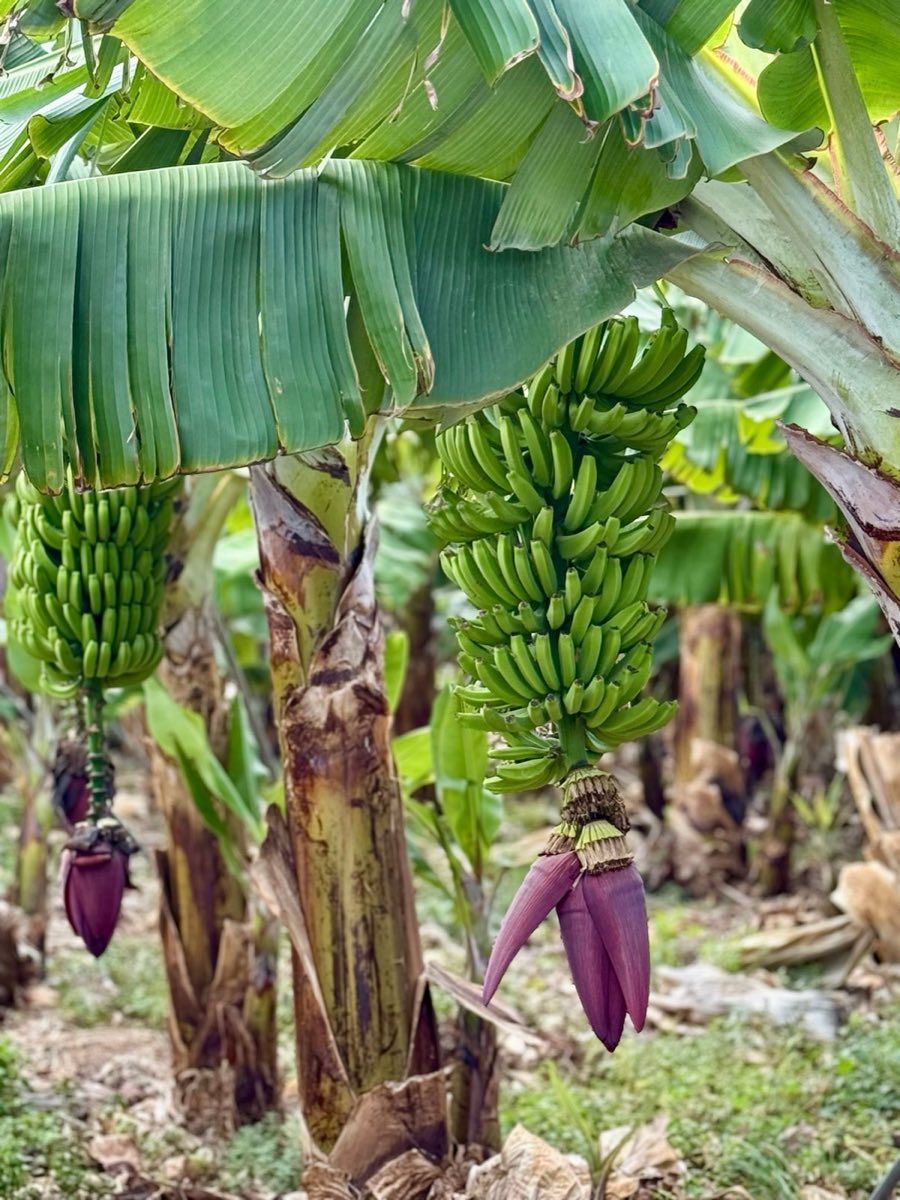
A banana plantation, the leaf canopy closed overhead and the stems running away in rows. Kayonza
On one ledger 3 pigs · poultry · banana
The third enterprise is the one that proves the design. A system that only understands animals would have made the banana site a spreadsheet again — and the transfers between the two sites are exactly where money goes missing.
The shape of the company Karaba Pigs · layers · broilers Kayonza Banana Inter-farm account both legs, or neither One set of accounts IFRS-aligned · RWF Per-site and per-enterprise

Not an architecture diagram — a legal and accounting one. The system's tables are laid out this way because the company is.

Why it exists Software written for a farm in Iowa assumes the connectivity, the currency and the paperwork of a farm in Iowa. Hedge was written on a farm in Rwanda, against the problems that farm actually has. Hedge · Kigali, Rwanda
  • Every feature had a bad day behind it. The approval queue exists because money moved without a second pair of eyes. The audit log exists because a number changed and nobody could say who changed it.
  • It survives the network. The farm's connectivity is not Kigali's. Records begin on paper and on phones, and the system was designed for that rather than apologising for it.
  • The accountant is a user, not an export. Management accounts come out of the same tables the herdsman writes into, so there is no reconciliation step where the two versions have to be argued about.

How we work


Four commitments, and the cost of each.

Principles are cheap when they cost nothing. Each of these has a price we actually pay, so each one is written with the price attached.

01

Sourced, or silent.

No figure appears on this site or in a Hedge report without a traceable origin. Where Rwanda's own statistics disagree — and on poultry they disagree by a factor of six — we publish which source we chose and why.

The cost: several persuasive numbers are missing from this site, including a national egg price, because we could not stand behind any published figure for one.

02

Posted once.

A feed issue, a mortality, a sale: entered where it happens, by the person it happened to, and never re-keyed into accounts. The operational record and the accounting record are the same rows.

The cost: it makes the first month harder, not easier. Getting a farm onto Hedge means fixing the opening balances properly instead of starting fresh and pretending.

03

Your data stays yours.

Every company on Hedge is isolated at the database level, not by a filter in the application that a bug could bypass. You can export your full record — ledger, animals, documents — at any time, in formats that open without us.

The cost: we cannot pool your production data into a benchmark product, which is the obvious second revenue line for a system like this.

04

One farm at a time.

There is no sign-up button on this site, and that is on purpose. Onboarding means taking on a real company's books, and we do it with the owner and the accountant in the room.

The cost: it does not scale the way a self-serve product does, and it means telling some people to wait.

Straight answers


What Hedge is not, today.

Not yet

A large installed base

One operation runs its real books on Hedge. If you need a system with a hundred reference customers, that is a fair requirement and we do not meet it.

Not yet

A self-serve product

There is no trial, no credit card form and no instant provisioning. Access is granted by us, after a conversation about your chart of accounts.

And one thing we will not become: a system that guesses. Where Hedge cannot compute a number from the record — a weight nobody took, a price nobody entered — it shows the gap rather than an estimate dressed as a fact. A farm manager can act on a missing reading. A plausible invented one costs them a decision.

Contact


See it running on a real farm.

The demo is not a slide deck. It is the live system on a working farm — the actual herd, the actual feed store, the actual ledger — and then a conversation about yours. Tell us what you run and we will come back to you.

  • Emailhello@hedge.rw
  • Based inKigali, Rwanda
  • Live systemEastern Province, two sites
  • Existing userSign in to Hedge
  • LanguagesEnglish · Kinyarwanda · French
What happens next
  • A reply from a person. Not a sequence. Usually within two working days.
  • A walk through the live farm. Screen share or in person if you are near Kigali.
  • An honest answer about fit. If Hedge is wrong for what you run, we will say so on that call rather than three months into an implementation.

We use what you send only to reply to you. See the privacy notice.